AI for Tradies: The Smart Tool Stack That Transforms Your Business End-to-End
You're not losing money on the tools. You're not losing it on labour. You're losing it on the two hours you spent last Tuesday typing up a quote, the phone tag trying to reschedule a job, and the invoice that's now three weeks overdue because you forgot to follow up. AI for tradies isn't about robots replacing your trade skills — it's about automating the business side so your evenings aren't spent doing admin that a computer could handle in seconds.
The catch? A single app won't fix this. The tradies winning back meaningful time aren't using one magic tool — they've built a deliberate stack where quoting software, job management, accounting, and customer comms all talk to each other. Here's exactly how to build that stack, layer by layer.
Where Tradies Lose Time Every Week
That breakdown reflects what we consistently hear from tradies across plumbing, electrical, HVAC, and building. Quoting and invoicing alone account for half your non-billable hours every week. Those are exactly the areas where AI makes the biggest dent — and where we'll start.
Why One App Won't Cut It
Most tradies who've experimented with AI have dipped a toe in — maybe asked ChatGPT to write a quote email, or turned on the basic automation inside their job management software. That's a start, but it's like buying one socket from a set. The real leverage comes when your tools connect.
A proper stack means: a lead comes in, it gets followed up automatically. A job finishes, the invoice generates itself. A customer goes quiet after a hot water replacement, a 12-month service reminder fires without you touching anything. Every one of those automations exists right now, and most of the pieces cost under $100 AUD per month. The trick is building the stack in the right order — starting where you're bleeding the most time.
Layer One: Quoting That Takes Minutes, Not Hours
Quoting is where most trade businesses haemorrhage the most non-billable time. A detailed quote for a commercial fit-out or multi-stage renovation can chew through two to three hours. AI-assisted quoting tools compress that dramatically.
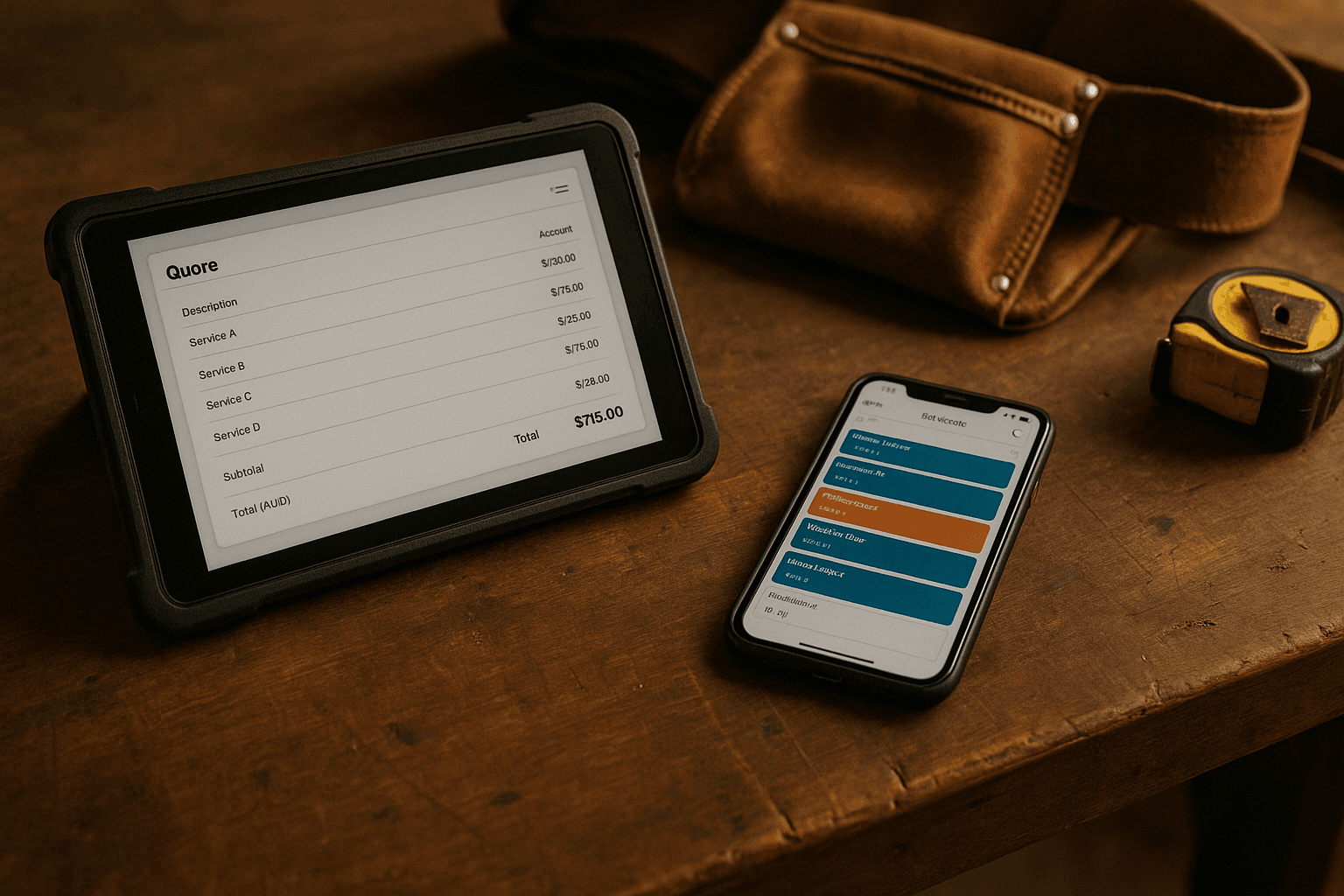
Buildxact is purpose-built for builders and contractors, using AI-assisted estimation to pull materials, labour rates, and markup into a structured quote automatically. Tradies report cutting complex quote preparation from three hours down to under 45 minutes. At around $199 AUD per month, it pays for itself the first time you win a job you would have otherwise quoted too slowly to secure.
Simpro suits HVAC and electrical businesses doing high-volume quoting, integrating with AI tools for live catalogue pricing so your margins stay accurate without manual updates. Even saving 30 minutes per quote across 15 quotes a week returns 7.5 hours to your schedule — that's nearly a full working day, every single week.
For smaller operators, Tradify (from around $35 AUD per month per user) includes smart quote templates that use your historical job data to suggest line items. It's a lighter-touch approach, but for sole traders and small crews, it's exactly the right level of complexity.
68%
of small trade businesses say quoting and estimating is their biggest non-billable time drain
Hipages Tradie Pulse Report 2023
Based on survey of 1,200+ Australian tradies across residential and commercial sectors
Layer Two: Scheduling Without the Phone Tennis
Back-and-forth scheduling — especially when jobs overrun or customers need to reschedule — eats time that should be spent on the tools. The fix is smart scheduling automation.
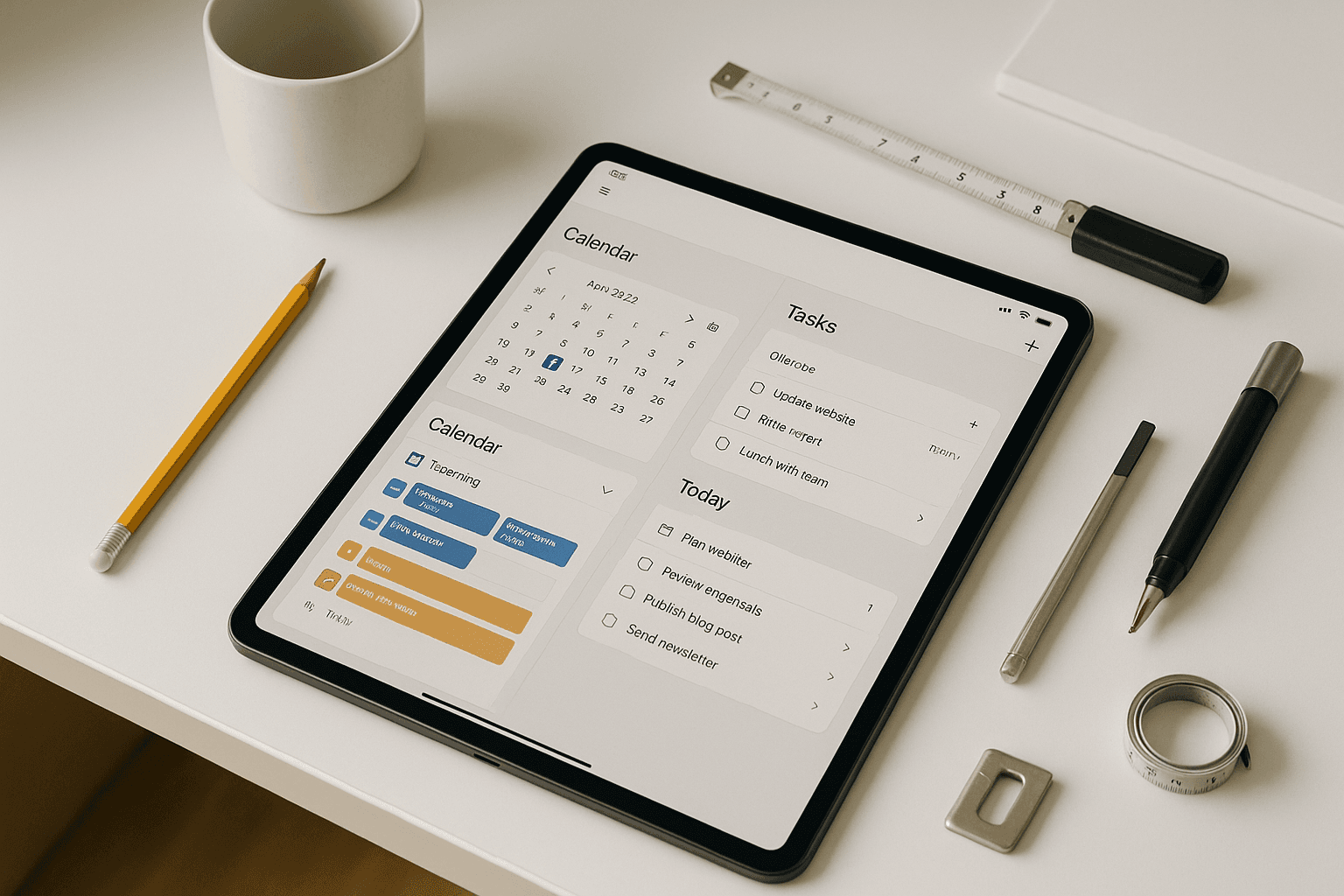
ServiceM8 factors in job location, estimated duration, and technician availability to suggest optimal routes and time slots. Integrated with Google Maps, it trims drive time and helps you fit more jobs into a day. For a plumber running three techs, squeezing in one extra job per tech per day can mean an additional $800–$1,200 AUD in daily revenue across the team.
Fergus handles automated job scheduling with drag-and-drop dispatch and notification triggers. When a job is assigned, the customer gets an SMS confirmation automatically. When the tech is on the way, another message fires. No one touches these — they just run. The result is a dramatic drop in "when are you coming?" calls clogging up your phone during work hours.
Connect either platform to a self-booking tool like Calendly and you can offer genuine self-service scheduling. Customer picks a time, it drops into your calendar, you get a notification. No call required on either end.
Set Up Zone-Based Scheduling From Day One
When you configure ServiceM8 or Fergus, build your service zones into the system before you do anything else. Grouping jobs by suburb and assigning minimum travel buffers between zones means the AI scheduler has accurate constraints to work with — and won't book your sparkie a 45-minute drive between back-to-back jobs.
Layer Three: Invoicing and Getting Paid Faster
The average small trade business in Australia waits 28–42 days to get paid on invoices that should settle in 7–14. That gap is a cash flow killer — and AI can systematically close it.
Xero includes AI-powered payment prediction that flags invoices likely to be paid late so you can follow up before they become a problem. Its automated payment reminders fire at set intervals in your tone, without you writing a single email. Pair Xero directly with ServiceM8 or Fergus and job completion triggers the invoice automatically — the job is done, the clock starts ticking, and you never had to open your laptop.
MYOB offers similar automation through AccountRight and Business, with AI-assisted bank reconciliation that learns your transaction patterns and matches payments automatically. For a business processing 50–80 invoices per month, that's two to three hours of bookkeeping back every week.
30-40%
reduction in late payments reported by businesses using Xero's automated invoice reminders within 90 days
Xero Small Business Insights 2023
Based on anonymised data from Australian small business accounts
Layer Four: Follow-Ups and Retention on Autopilot
Winning a customer once is expensive. Keeping them for a service reminder, a maintenance check, or a referral costs almost nothing — if you have a system. Most tradies don't have a system. They're too busy.
ServiceM8 includes automated follow-up messaging triggered by job type, completion date, or customer tag. Set up a sequence for hot water system replacements that sends a 12-month service reminder automatically, and you've built a passive revenue stream with zero ongoing effort.
For more sophisticated nurture, connect your job management software to ActiveCampaign (from around $29 AUD per month) via Zapier. A completed air conditioning installation triggers a three-message sequence: a thank-you, a care guide, and a six-month service reminder — all personalised with the customer's name, address, and job details pulled from your CRM automatically.
Get practical tips for your trade business
Free guides, tools, and insights — delivered when we publish something worth reading.
Setting Up Your AI Stack: A Practical Starting Point
The biggest mistake tradies make when building an AI stack is trying to set everything up at once. Pick one pain point, nail the automation, then layer the next one on top.
How to Build Your AI Stack (Without the Overwhelm)
Start with quoting or invoicing — whichever costs you more time
Sign up for a trial of Buildxact, Tradify, or Simpro. Import your existing job types and rate cards. Run your next three quotes through it before committing.
Connect your job management platform to your accounting software
Link ServiceM8 or Fergus to Xero or MYOB. Test the integration by completing a dummy job and confirming the invoice generates automatically in your accounting tool.
Activate scheduling automations and customer notifications
Turn on the SMS confirmation and 'on my way' triggers in your job management platform. Set your service zones and travel buffers before going live.
Build one follow-up sequence for your most common job type
Create a single automated follow-up for your highest-volume job — whether that's a service call, installation, or inspection. Measure the repeat booking rate over 90 days before expanding.
The 90-Day Rollout: Realistic Milestones
Most tradies who try to implement too much at once end up reverting to spreadsheets after three weeks. A staged rollout means you're building on wins, not drowning in new software.
Your 90-Day AI Stack Rollout
Quoting and Invoicing Automation
Trial and commit to one quoting tool. Connect it to your accounting software. Activate automated invoice generation on job completion. Target: zero manual invoices by end of month.
Scheduling and Customer Comms
Activate smart scheduling in your job management platform. Set up automated SMS confirmations and 'on the way' notifications. Connect a self-booking tool if you take inbound enquiries. Target: 50% reduction in inbound scheduling calls.
Follow-Ups, Retention, and Marketing
Build your first automated follow-up sequence for your most common job type. Set up automated review requests via Podium or NiceJob. Review your numbers — quoting time, payment days, repeat bookings — and identify the next automation to layer in.
AI for Marketing: Get Found Without Becoming a Content Creator
You don't need to become a content creator. You need to show up when someone in your area searches for what you do. AI tools make that achievable without hiring an agency.
ChatGPT can generate suburb-specific service pages, Google Business Profile posts, and FAQ content in minutes. Feed it your service list, target suburbs, and a few details about your business, and it'll produce content that would cost $150–$300 AUD per page to commission from a copywriter. It won't be perfect straight out of the box — you'll need to add specific job examples and local detail — but the heavy lifting is done.
For Google Ads, Performance Max campaigns now use AI to optimise placement, bidding, and creative across search, display, and Maps automatically. For a tradie spending $1,500–$3,000 AUD per month on Google Ads, properly structured Performance Max campaigns consistently deliver 15–25% more leads without increasing spend.
Pair your content efforts with Podium or NiceJob for automated review requests. Both use AI-timed prompts to ask for Google reviews at the moment customers are most likely to respond positively. More reviews mean better local rankings — and that compounds over time in a way that paid ads never do.
AI for Customer Enquiries: Be Available Without Being on Call
Customers comparing tradies on a Sunday afternoon book the one who responds first. You can't always be available — but a trained AI chatbot can be. Tools like Tidio or Intercom can be configured to answer common questions, qualify leads, and capture job details 24/7. When Monday morning arrives, you've got structured enquiries waiting rather than missed calls and vague voicemails.
The setup takes a few hours: write out your 15 most common customer questions, feed them into the chatbot builder with your answers, and embed the widget on your website. That's a one-time effort that handles customer enquiries indefinitely.
This is where the stack comes full circle. A lead captured by your chatbot on Sunday night feeds into your job management platform, triggers a quote, generates an invoice on completion, and fires a follow-up reminder 12 months later. Every step automated. Every touchpoint professional. You just did the actual work.
AI for tradies isn't one app — it's a connected stack of quoting, scheduling, invoicing, and follow-up tools that each solve one specific problem. Build it layer by layer over 90 days, starting with wherever you lose the most non-billable time. Done right, most trade businesses can recover 8–12 hours of admin every week without hiring anyone new or spending more than $300 AUD per month on software.