
Job Quoting Software for Tradies: The Complete 2026 Guide to Choosing the Right Tool
If you're still typing quotes in Word or copy-pasting figures into an email, you're not just wasting time — you're handing jobs to competitors who've sorted their quoting workflow. The right software means a professional, itemised quote lands in your customer's inbox before you've pulled out of their driveway. That speed alone wins jobs.
This guide gives you an honest, no-nonsense breakdown of the main quoting platforms available to Australian tradies in 2026 — what each one actually does, what it costs, and which is likely to suit your trade and your business size. No affiliate rankings. No sponsored placements.
Related: 6-Step Marketing System for Service Business Calendars
Where Tradies Lose Time Every Week
The admin burden is real and it compounds. Australian tradies consistently report spending five to ten hours a week on quoting, invoicing, and general paperwork. At $120 an hour, that's potentially $600 to $1,200 a week in time you're not billing for. The good news is most of that time is recoverable — but only if you pick a tool that actually fits how you work, and set it up properly.
5–10 hrs
Average weekly admin time reported by Australian tradies
Xero Small Business Insights 2024
Includes quoting, invoicing, scheduling, and payment follow-up
Why Digital Quoting Has Become Non-Negotiable
Five years ago, sending a PDF quote same-day made you look sharp. Today it's the baseline expectation. Customers are comparing two or three tradies at once, and the one who responds fastest with a clear, professional document often wins — even if they're not the cheapest.
Beyond the impression it makes, quoting software closes a genuine operational gap. Manual quoting — whether that's Word, a spreadsheet, or pen and paper — introduces errors in labour calculations, misses items off material lists, and creates double-entry when you eventually need to raise an invoice. Software eliminates all three problems when it's set up properly.
The platforms have also matured significantly. Mobile apps that actually work in the field, GST-compliant templates, automatic follow-up reminders, and clean integrations with Xero and MYOB are now standard features rather than premium add-ons. The question isn't whether to use quoting software — it's which one to use.
ServiceM8: Where Most Australian Tradies Start
ServiceM8 is built in Australia and used broadly across residential and light commercial trades. It's practical, well-supported, and its free tier is genuinely useful — not a stripped-out teaser designed to frustrate you into upgrading.
The free plan covers five jobs per month, basic quoting, and scheduling. For a sole trader who wants to test whether digital quoting actually improves their workflow before spending anything, that's enough. Paid plans start at around $9/month and scale to $349/month depending on job volume and team size. Higher tiers add automated follow-ups, GPS tracking, and detailed reporting.
ServiceM8 — Honest Assessment
Pros
Free plan available — no credit card required
Built in Australia with ATO-compliant GST handling
Customers can approve, sign, and pay a deposit without a phone call
Accepted quotes convert directly to invoices via Xero or MYOB integration
On-site photo capture attaches directly to quotes
Cons
Job management software first — quoting is one feature, not the focus
Multi-stage project quoting feels lightweight for complex commercial jobs
Template setup takes time upfront before you see speed benefits
Higher tiers can feel expensive for small teams with occasional quoting needs
Where ServiceM8 genuinely earns its reputation is the customer acceptance flow. You send the quote, the client taps to approve, signs digitally, and can pay a deposit — all from their phone. No back-and-forth calls, no chasing a signature. For plumbers, electricians, and HVAC techs doing residential work, it streamlines the close without any friction.
The limitation worth flagging: ServiceM8 is a job management platform with good quoting built in. If your main need is complex multi-phase project quoting or detailed cost analysis by trade category, it can feel underpowered. For straightforward residential and light commercial work, though, it hits the sweet spot.
Tradify: Built for Speed in the Field
Tradify's core selling point is how fast you can produce an accurate quote on-site. The template system lets you build job types with pre-loaded labour rates, materials, and your standard markup. Once your templates are configured, you can build a complete quote from your phone in under five minutes while you're still at the customer's property.
The mobile app is legitimately good — not a cut-down version of a desktop tool, but a properly designed field experience. You can take measurements, capture photos, pull items from your price book, and fire the quote off before you've got back to the van.
Pricing sits at around $48/month for small teams, scaling with additional users. GST handling is correct out of the box, and the Xero integration is clean. Tradify also offers a 14-day free trial with no credit card required, which is the right way to evaluate any tool — use it on real quotes, not just a demo.
One honest caveat: reporting and job costing are less detailed than some competitors. If you need margin analysis across multiple cost centres or detailed project financials, you may find Tradify limited as your business grows. For small to medium residential trade businesses, it's hard to fault.
Set Up Your Price Book Before Your Trial Ends
The single biggest factor in how useful any quoting tool becomes is how well your price book is configured. During your trial period, spend a couple of hours loading your standard materials and labour rates. Tradies who skip this step often abandon software that would have worked perfectly for them — because they're still manually entering line items every time.
Fergus: The Pick for Material-Heavy Trades
Fergus is the standout choice when material costs are a significant portion of your jobs — plumbing, electrical, HVAC, and similar trades where getting the materials estimate wrong by even 10–15% can hurt your margin badly.
The differentiating feature is supplier price book integration. Rather than guessing at current pricing or maintaining a spreadsheet that's always slightly out of date, Fergus pulls live pricing from your suppliers, applies your markup, and includes it directly in the quote. In a market where material costs have been volatile, this is margin protection as much as it is convenience.
Fergus also handles multi-stage job quoting better than most platforms, which makes it a common choice among builders and contractors managing larger residential or commercial projects. Pricing sits at around $40 per user per month.
The trade-off is setup time. Fergus has a steeper learning curve than ServiceM8 or Tradify — budget two to three weeks to configure your supplier connections, price books, and job templates properly. The payoff is real once it's done, but don't expect to be fully operational on day one. If you're evaluating Fergus, allow the full trial period to reflect actual setup conditions, not a best-case demo.
Simpro: For Larger Operations and Complex Commercial Work
If you're running a team of five or more and managing multi-stage commercial projects, Simpro is worth serious consideration. It's more expensive and more complex than the options above — but it's built for a different level of scale.
Simpro's quoting module handles variations, detailed cost breakdowns by phase, and full job costing. It's widely used by established electrical, plumbing, and HVAC businesses across Australia. Reporting gives you a clear view of margin at the individual job level, which matters when you're managing multiple projects simultaneously and need to understand where money is being made or lost.
Pricing is quote-based depending on team size, but expect $200–$500+/month for a typical team setup. It's not the right tool for a sole trader or a two-person operation, and the complexity would be overkill. For a trade business turning over $1M+ a year with a team to manage, the investment is proportionate to the capability.
How to Choose the Right Tool for Your Business
The decision is simpler than it looks once you strip away the marketing.
Choosing and Setting Up Your Quoting Software
Identify your actual bottleneck
Is your problem quoting speed, materials accuracy, team coordination, or cash flow visibility? Different tools solve different problems. Tradify solves speed. Fergus solves materials accuracy. Simpro solves complexity. Pick the tool that addresses your real pain point, not the one with the most features.
Start a trial with real jobs
Every major platform offers a free trial. Don't evaluate on a demo — run your next five actual quotes through the software. That's the only honest test of whether it fits your workflow. ServiceM8's free tier requires no credit card at all.
Configure your price book properly
Load your standard labour rates, common materials, and markup percentages before you start quoting. A quoting tool with an empty price book is just a prettier version of your Word doc. The setup is boring but it's where the time savings come from.
Connect your accounting software
Link Xero or MYOB during setup, not later. The real efficiency gain — quotes converting directly to invoices without double-entry — only works when the integration is live from the start. Most platforms walk you through this in the onboarding flow.
Related: From Confusing to Clear: The One-Link Strategy That Works
Here's the quick version of the decision logic: sole traders and small teams should start with ServiceM8 or Tradify. Material-heavy trades — plumbing, electrical, HVAC — should look at Fergus. Larger operations doing complex commercial work should evaluate Simpro. If you're genuinely unsure, ServiceM8's no-credit-card free tier is the lowest-friction starting point available.
The 90-Day Rollout: Getting Value Quickly
The most common reason tradies abandon quoting software isn't that the tool is bad — it's that they tried to use it while also maintaining their old process, and eventually defaulted back to what was familiar. A structured rollout prevents that.
90-Day Quoting Software Rollout
Setup and first real quotes
Pick your platform. Complete the onboarding. Load labour rates and your 20 most common materials into the price book. Run every quote through the new system from day one — even if it takes slightly longer initially. Connect Xero or MYOB.
Templates and team habits
Build job templates for your three to five most common job types. If you have staff, get them using the mobile app for on-site quoting. Start using the photo capture feature on every site visit. Turn off the Word doc.
Measure, adjust, automate
Review your quote-to-acceptance rate. Enable automated follow-up reminders if your platform supports them. Refine materials pricing to reflect current supplier costs. Identify the two or three templates that save you the most time and build out more job types.
The tradies who get the most out of quoting software are the ones who commit to the new process during that first month, even when the old way feels faster. After 30 days of proper use, the time savings are real and the habits are locked in.
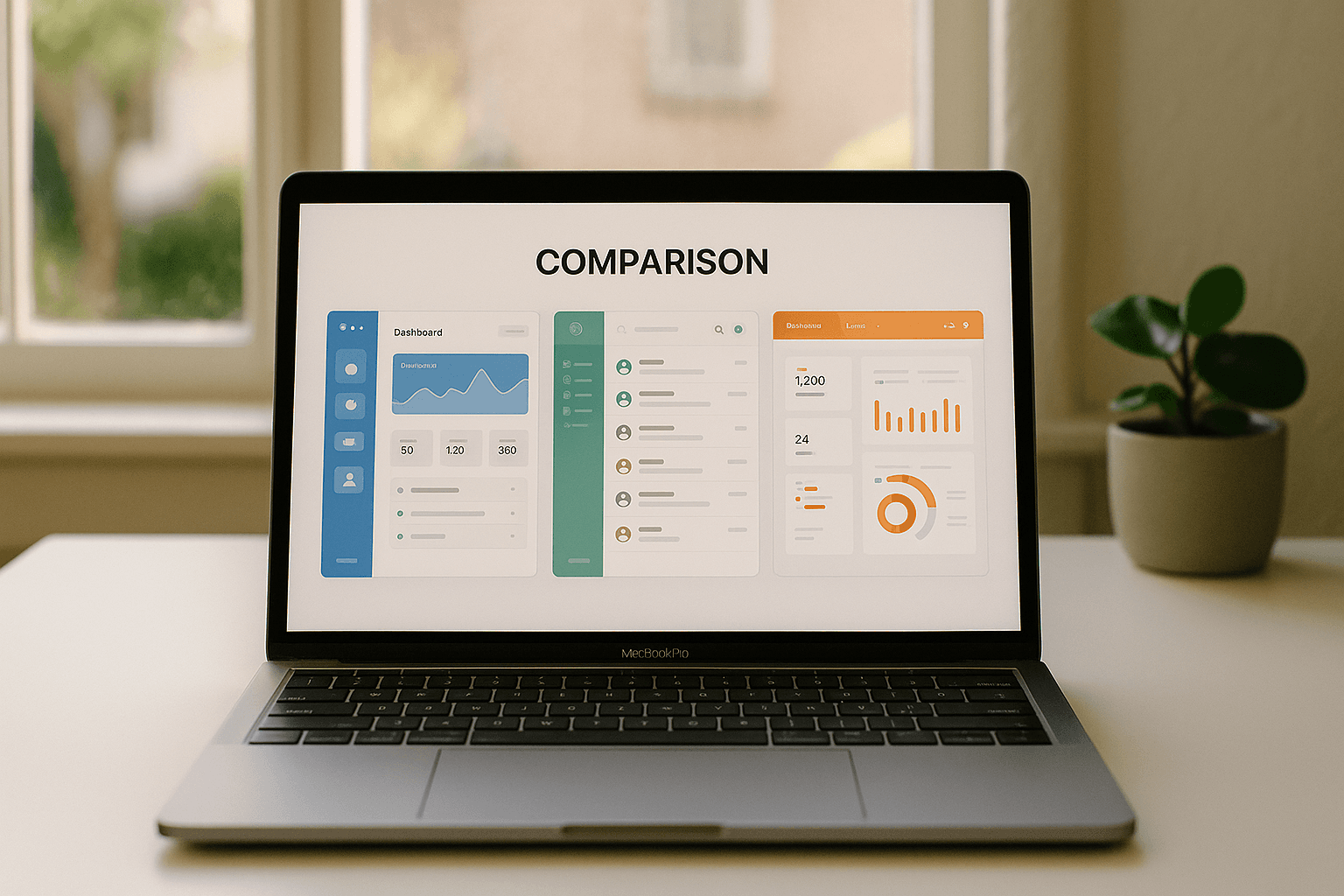
A Quick Comparison Before You Decide
Australian Tradie Quoting Software Comparison 2026
ServiceM8
Free–$349/mo
- ·Job management + quoting
- ·Mobile quote builder
- ·Customer approval flow
- ·Xero and MYOB integration
- ·On-site photo capture
Free plan available
Built in Australia
Easy to start using
Strong customer acceptance UX
Lightweight for complex projects
Quoting is one feature among many
Best starting point for sole traders and small residential trade teams.
Tradify
$48–$62/mo
- ·Template-driven quoting
- ·Strong mobile app
- ·Price book with markup
- ·Xero integration
- ·14-day free trial
Fastest on-site quoting
Genuinely good mobile experience
Clean Xero integration
Reporting lacks depth
Can feel limited at scale
Best for small teams prioritising quoting speed in the field.
Fergus
~$40/user/mo
- ·Live supplier pricing
- ·Multi-stage project quoting
- ·Materials markup automation
- ·Job costing
- ·Xero integration
Supplier price book integration
Strong for materials-heavy trades
Good multi-stage quoting
Steeper learning curve
Setup time investment required
Best for plumbers, sparkies, and HVAC businesses where material costs drive margin.
Simpro
$200–$500+/mo
- ·Full project management
- ·Detailed job costing
- ·Variations management
- ·Multi-stage commercial quoting
- ·Advanced reporting
Built for complexity and scale
Detailed margin visibility
Handles large commercial projects
Expensive for small teams
Significant onboarding investment
Overkill under 5 staff
Best for established trade businesses running complex commercial projects.
The comparison makes one thing clear: there's no single best tool. There's the best tool for your trade, your team size, and your workflow. A plumber quoting residential jobs has different needs from an electrical contractor managing multi-stage commercial builds. Match the tool to your actual situation, not someone else's recommendation.
Get practical tips for your trade business
Free guides, tools, and insights — delivered when we publish something worth reading.
The Bottom Line
The gap between tradies who win jobs and tradies who lose them on quoting is increasingly about speed and professionalism — not price. A well-configured quoting tool addresses both. The setup investment is a few hours. The ongoing time saving is measurable within the first week.
Don't overthink the platform choice. Pick one that suits your trade and your team size, run a real trial on actual jobs, and commit to the process long enough to see the results. Switching tools later — once you've found one that doesn't quite fit — is easier than it sounds.
The right quoting software cuts quote build time from 30–45 minutes to under 10, eliminates double-entry between quoting and invoicing, and lets customers approve and sign without a phone call. Start with ServiceM8 or Tradify if you're a sole trader or small team, Fergus if materials costs drive your margins, and Simpro if you're managing complex commercial work. Pick one, use it on real jobs during the trial, and set up your price book properly before you start — that's where the time savings actually live.